Bugle (Ajuga reptans)
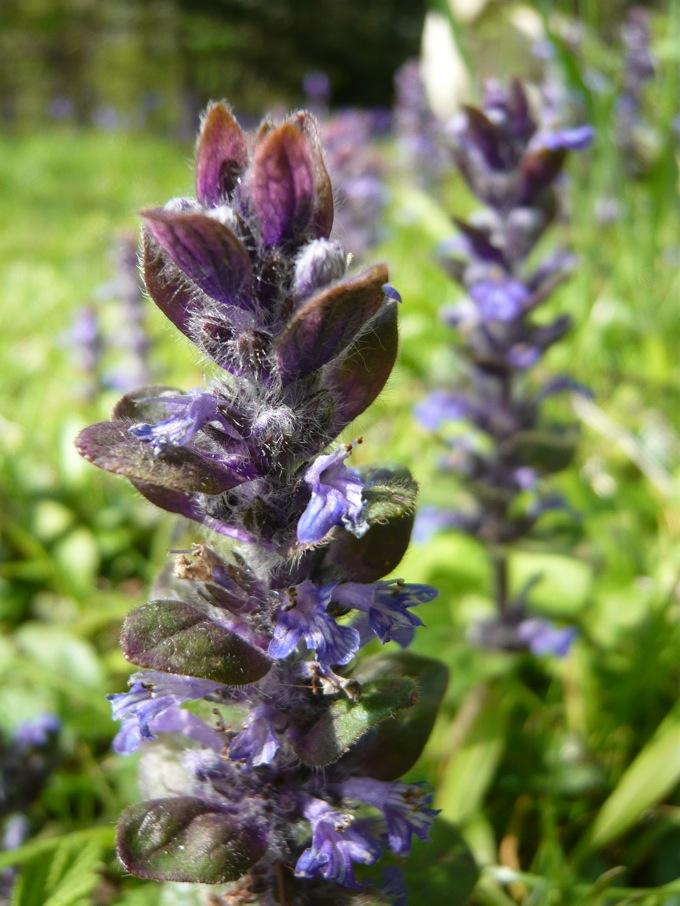
This powerhouse for bees provides a dense easily-accessible source of nectar early in the Spring for early-emerging queens and active bumblebees when other food is scarce. Its low-growing mat-forming habit also acts as a natural living mulch, suppressing weeds while giving ground-nesting pollinators safe, open access to the blooms.
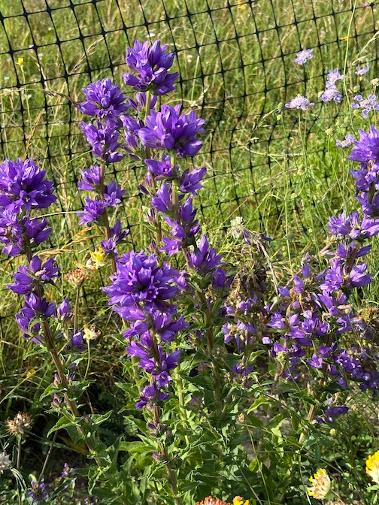
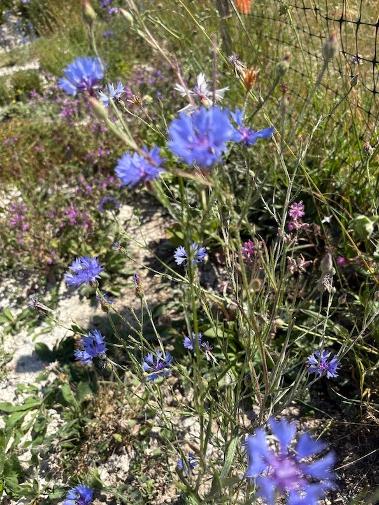
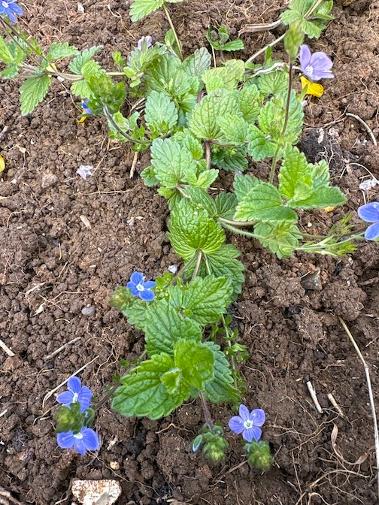
It also serves as a crucial larval food source for the Speedwell Longhorn moth and is one of the primary host plants for the rare and protected Heath Fritillary butterfly.
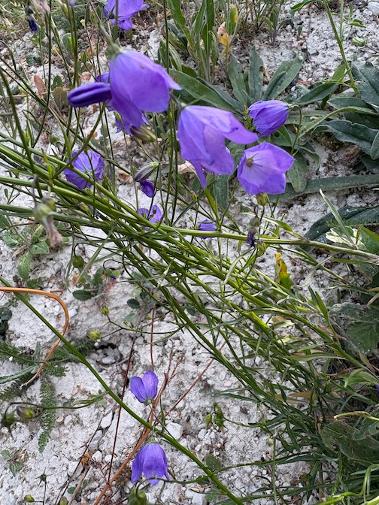
The caterpillars of the Northern Rustic and Dot moths rely heavily on the foliage of the Harebell as a food source. The Marbled Coronet moth larvae feed on the seed capsules and flowers of harebells as do larvae of the Grey Chi moth. Harebell flowers are regularly visited by honeybees, long-tongued and short-tongued bumblebees and various specialist and solitary bees. The most common solitary bee you will see on the harebells is the Harebell Carpenter bee (also known as the small scissor bee). This tiny (4-6mm) black bee often rests inside the bells overnight or when the weather is wet. Its relative, the Large Scissor bee, uses its long mouthparts to reach nectar inside the bell-shaped flowers. Other solitary bee visitors to harebells are the Gold-tailed Melitta bee and the Furrow bees.
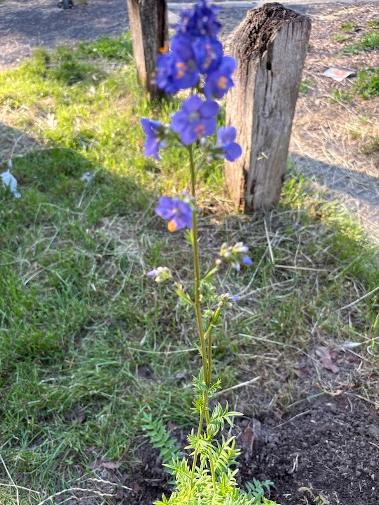
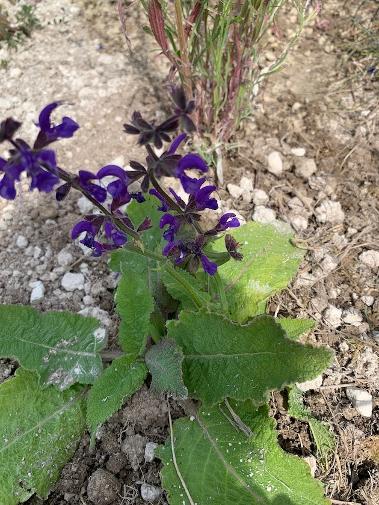
Devil’s-bit Scabious is the essential caterpillar food plant for the endangered Marsh Fritillary butterfly and so vital in supporting its vulnerable status.
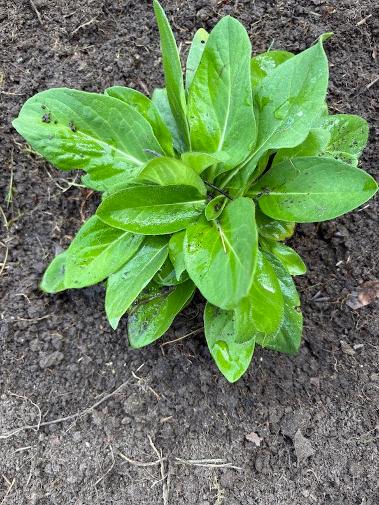
Scabious, Field (Knautia arvensis)
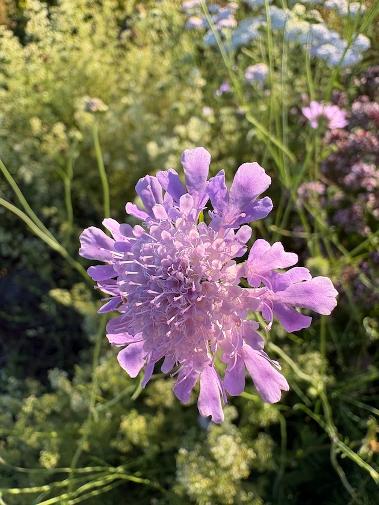
Its broad pincushion-like flowerheads act as perfect landing pads for insects providing a vital late-season food source for bees, butterflies and hoverflies and are the primary foraging target for specialised species like the Scabious Bee. It also serves as a secondary larval food plant for the caterpillars of the rare Marsh Fritillary butterfly and the highly-mimetic Narrow-bordered Bee Hawk-moth.
Scabious, Small (Scabiosa columbaria)
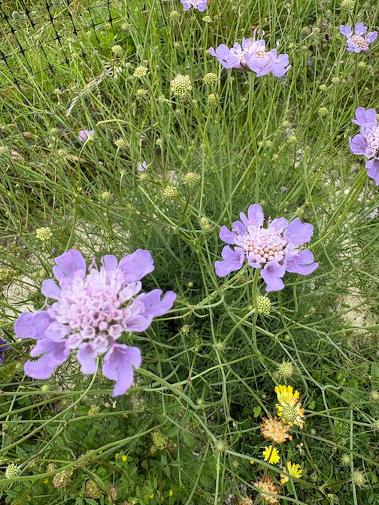
Produces large light blueish purple flowers which attract bees, butterflies, moths and birds. The Small Scabious Mining Bee is particularly dependent on its pollen and the foliage serves as a crucial food source for the caterpillars of several moth species, including the day-flying Six-spot Burnet.
Field Scabious is often confused with the similar Small Scabious. However, Field Scabious has four petal-lobes while Small Scabious has five. Field Scabious stems are taller (up to 1m) and are covered in bristly downward-pointing hairs. Small Scabious is shorter (up to 70cm) and its stems are much more slender, downy and less hairy. Field Scabious leaves are broader, spear-like and have shallow teeth or lobes. Small Scabious has fine, deeply divided, almost lace-like leaves.
Selfheal (Prunella vulgaris)
The nectar-rich tubular purple flowers bloom from late Spring to Autumn offering consistent food during periods when other flowers may fade and its specialised flower structure ensures it is easily accessed by bumblebees and solitary bees. The larvae of the Self-heal Dot micro-moth are highly dependent on Sellfheal. The caterpillars of the Bright-line Brown-eye and Shaded Pug moths are also known to feed on Selfheal as well as other plants.
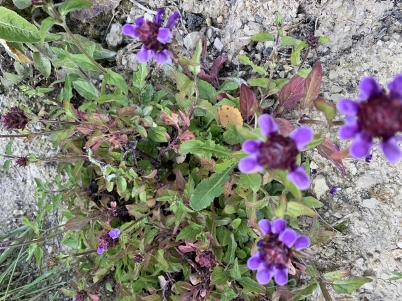
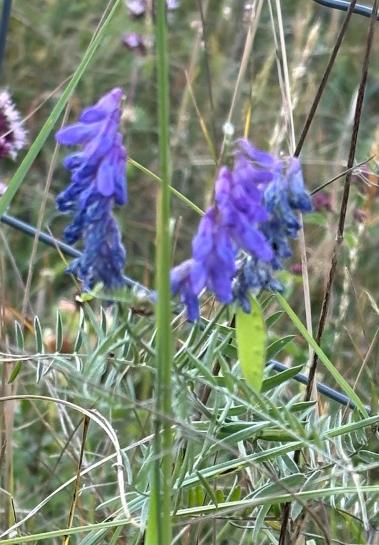
We hope to persuade it to grow through our chain link fence around the butterfly bank as its scrambling, vining growth habit creates thick, intertwined mats, providing excellent cover, nesting sites and safe corridors for insects and small wildlife.
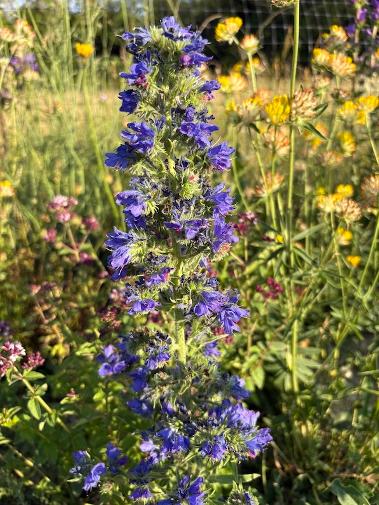
The plant produces nectar with a high sugar content, attracting over 20 species of butterflies. Common visitors include the Large Skipper and Painted Lady. Certain solitary bees, like the Viper’s Bugloss Mason Bee, are heavily specialised and rely on this plant to thrive. It also attracts a wide array of bumblebees (including Buff-tailed and Red-tailed species).